Welcome to my new blog about advanced manufacturing 3D printing
Made by: Nuria de Blas and Alba Ortiz
Advanced manufacturing
The advanced manufacturing, also called industry 4.0, it was coined by the German government to describe the intelligent factory, a vision of computerized manufacturing with all the processes interconnected by the Internet of Things (IOT). It is what we know as the industrial Internet of things, I2OT. The 4 refers to the fourth industrial revolution and is expected to arrive with the interconnection of all elements. Advanced Manufacturing encompasses the set of technologies developed in industrial environments to make manufacturing more agile and efficient. To do this, it uses advanced digital technology applications on the industrial environment. The advanced industry must allow us to be able to change our business model to manufacture 1000 units of one thing, to manufacture 1 unit of a thousand things.
We can group 6 technologies that bring us closer to that future:
- Internet of Things
- Additive manufacturing, 3D printing
- Big data
- Artificial intelligence
- Collaborative robotics
- Virtual or augmented reality
Because it is important?
Advanced manufacturing is one of the metapriorities of intelligent specialization identified in Euskadi, given that it is a multisectoral priority with transversal applicability.
In addition, there is an Advanced Manufacturing Strategy 2020 whose mission is to strengthen the position of the Basque Country as an industrial-based economy through the promotion of knowledge-intensive manufacturing, with defined strategic objectives.
There is a type of advanced manufacturing called additive. With this link we can see what it is:
3D printing
Definition
A 3D printer is a machine capable of replicating 3D designs, creating pieces or volumetric models from a computer-made design. They arose with the idea of converting 2D files into real or 3D prototypes. It has been commonly used in the prefabrication of parts or components, in sectors such as architecture and industrial design. Currently its use is being extended in the manufacture of all types of objects, models for emptying, complicated parts, food, medical prostheses…
History
The start of 3D printing dates back to 1976, when the inkjet printer was invented. In 1984, some adaptations and advances on the concept of inkjet transformed the technology of printing with ink to printing with materials. Over the past few decades, there have been a wide variety of 3D printing technology applications that have been developed across various industries.
Advances
Some of the great advances that can be obtained with these machines are:
1) 3D printing speeds will increase between 50 and 100 times
2) Sustainable and affordable 3D printed neighborhoods are being built
3) Delicious steaks and burgers printed in 3D in restaurants
4) Metal 3D printers will outperform plastics
5) «Hey» will be the most used command in design engineering
One of the most important advances, for what it requires, is the relationship of 3D printers with health, in recent years it has managed to advance by leaps and bounds.
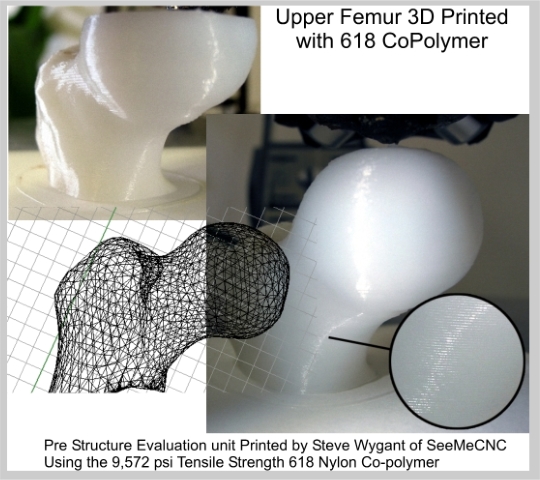
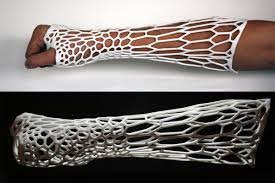
Prosthesis is a breakthrough in this field. Given the need for prostheses to be personalized, that is, adapted to the specific needs of each patient, this is one of the fields in which more advances in medicine are providing 3D printing.
Additive manufacturing has been used in many different cases: dental prostheses, hip replacements, coronary valves, knee reconstruction, titanium rib cages, skull reconstruction…
It has also made progress with skin and tissues, and is currently being carried out in two ways; The first of these is the possibility of printing 3D skin directly on the body. In the case of burned patients, the reconstruction of the skin, the body’s natural barrier against external aggressions and infections, is of vital importance.
However, surgery requires long periods of time to be effective and successful, and usually involves taking parts of skin from other parts of the body to be placed in the injured areas.
This procedure, depending on the importance of the injuries, may not be enough to cover the wound.
The second is to print tissues that can later be part of a human body.
Another use we can get from 3D printers is related to life in space, since it is very complicated to transport many things from Earth out, so using this type of printers we can create new objects or utensils totally necessary once that we are outside of our planet.
These machines may not have yet reached the homes in mass, but they have arrived at the International Space Station (ISS). The first model, in fact, did it in 2014: it was used to print spare parts. Since November of this year, the largest artifact put into orbit by mankind has a much better printer model: one capable of recycling used parts to generate new ones.
This new 3D printing system, baptized by NASA as Refabricator, was introduced in August and sent to the station in November. The machine, the size of a small refrigerator, is capable of converting old plastic items into filaments, the raw material used by printers to print objects.
Made In Space is an American company that works in collaboration with NASA for the development of additive manufacturing in space. We have seen projects such as your 3D Zero Gravity printer capable of manufacturing in zero gravity environments or its development when printing structures in a space-like environment. There is no doubt that it is a company that is driving the development of multiple applications of 3D printing in space.
This company founded in 2010 already has offices in different points in the US, covering Florida, California, Alabama and Ohio. The goal of this company, which began as a an impossible dream, is to take additive manufacturing into space and ensure that human beings can live outside the Earth. Something that in these eight years is getting successful.

More uses:
Today the world of 3D printer has grown considerably, so much so that we can obtain one of them for personal use. There are several companies which work in their sale.
Here we can see several companies which are responsible for the manufacture of 3d printers. https://www.3dnatives.com/es/directorio-impresion-3d/categories/fabricantes-de-impresoras-3d
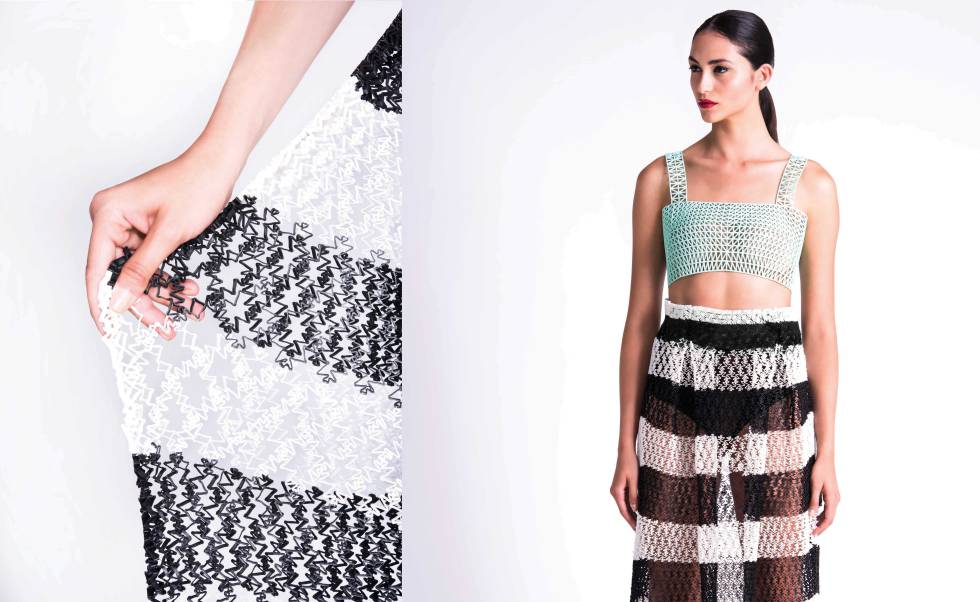
Perhaps the fabric is the most comfortable element to wear, however, this has not stopped innovation in the field of fashion using 3D printing creating custom-made models of each person such as dresses, shirts and even underwear, which It turns out to be a hard plastic to occupy.
You can even create a camera, a fact that a designer has already achieved and whose pieces were printed in 3D. It is not the best camera in the world and requires some pieces that cannot be printed, but it is interesting for those who want to experiment with photography. Over time, even more interesting versions can be achieved.
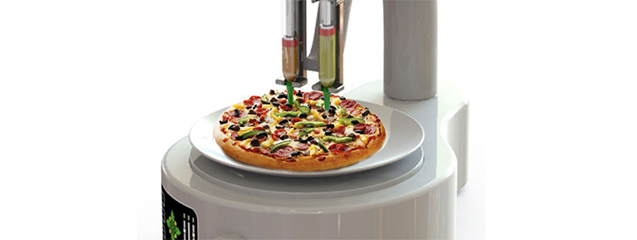
One of the coolest and craziest things is to make food thanks to these machines, moreover, a US company called The Sugar Lab offers various desserts made of water and hardened sugar, starting a luxury food business of great appearance and It successfully captivates the interest of consumers.
 Nuria and Alba